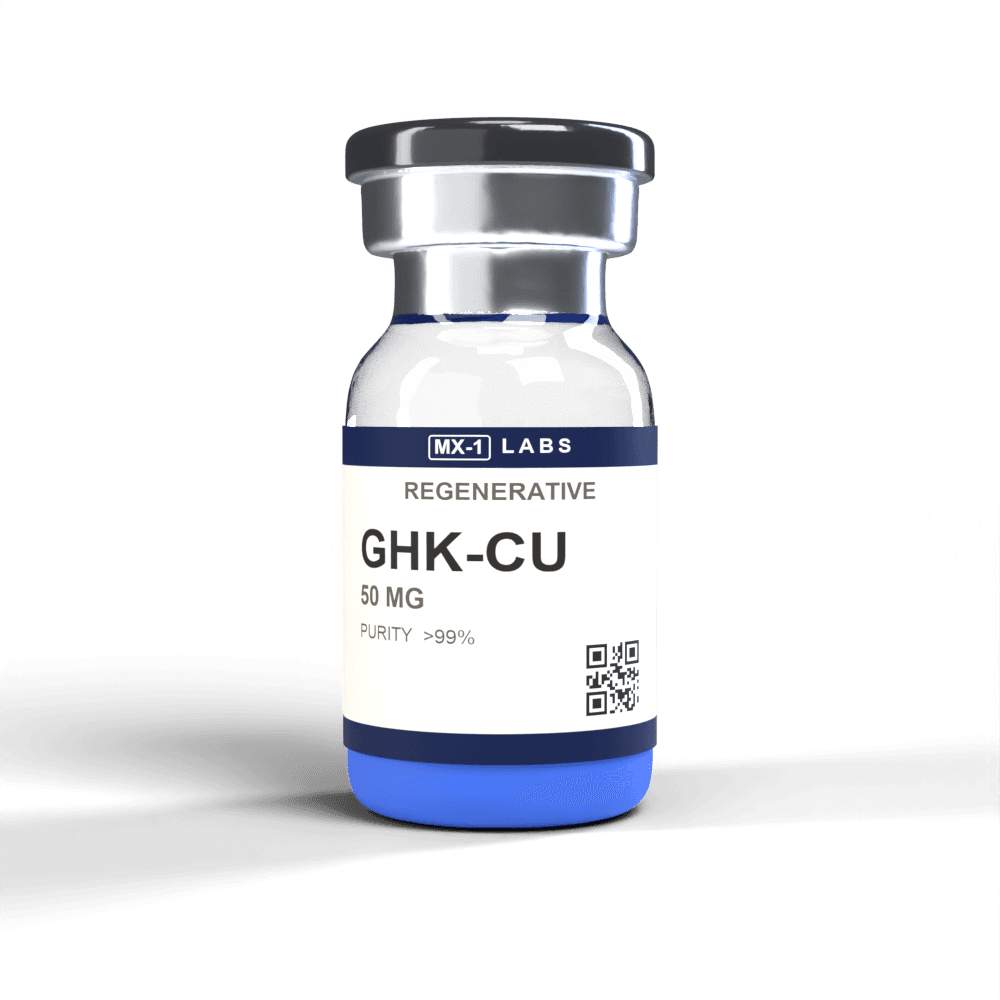
- CAS#
- 89030-95-5
- Formula
- C14H22CuN6O4
- M.W.
- 401.91 g/mol
- Sequence
- GHK
Ships in 24–72 business hours from CDMX · Free shipping over MX$2,500.00
GHK-Cu 50 mg (copper glycyl-L-histidyl-L-lysine) is an endogenous tripeptide naturally present in human plasma, supplied as a sterile lyophilized powder with the characteristic blue crystalline appearance of the copper-peptide complex. ≥99% purity verified by HPLC, batch CoA.
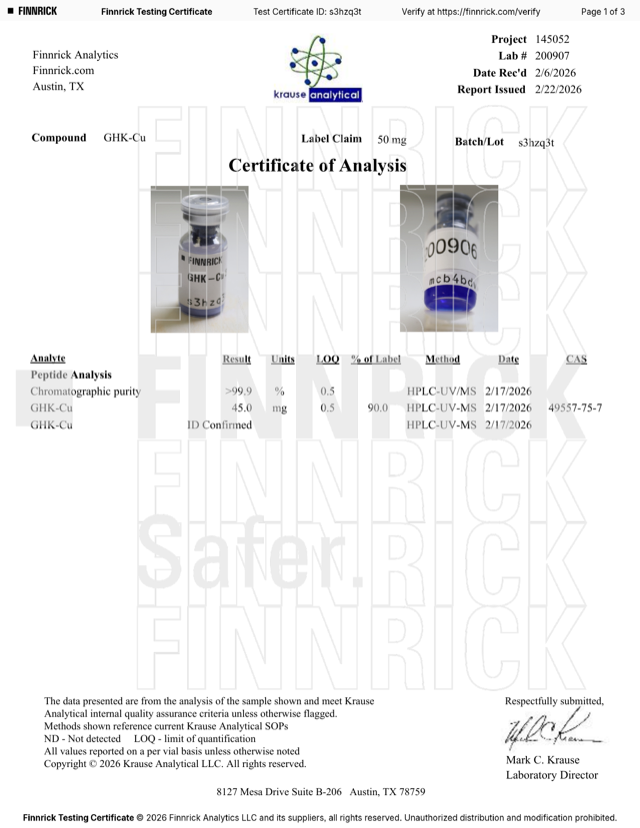
Certificate of Analysis
- Lot
- s3hzq3t
- Expires
- 2028-02
- Chromatographic purity
- ≥99.9%
- Mass Spectral Match
- Confirmed
- Content
- 45 mg · 90% of label
- Analyzed by
- Krause Analytical · 2026-02
Preview COAHide preview
- CAS#
- 89030-95-5
- Formula
- C14H22CuN6O4
- M.W.
- 401.91 g/mol
- Sequence
- GHK
- Lot
- s3hzq3t
- Expires
- 2028-02
- Chromatographic purity
- ≥99.9%
- Mass Spectral Match
- Confirmed
- Content
- 45 mg · 90% of label
- Analyzed by
- Krause Analytical · 2026-02
Preview COAHide preview
GHK-Cu 50 mg (copper glycyl-L-histidyl-L-lysine) is an endogenous tripeptide naturally present in human plasma, supplied as a sterile lyophilized powder with the characteristic blue crystalline appearance of the copper-peptide complex. ≥99% purity verified by HPLC, batch CoA.
Ships in 24–72 business hours from CDMX · Free shipping over MX$2,500.00
Technical specifications
- Molecular weight
- 340.38 Da (Cu complex)
- Sequence
- Gly-His-Lys · Cu²⁺
- Format
- Sterile lyophilized
- Content
- 50 mg per vial
- Purity
- ≥99% verified by HPLC in batch CoA
- Appearance
- Characteristic blue crystalline powder
- Identity
- Confirmed by MS and atomic absorption of Cu
- Endotoxins (LAL)
- < 5 EU/mg
- Water content (Karl Fischer)
- < 6%
- Amino acid analysis
- Composition confirmed by acid hydrolysis
About GHK-Cu 50 mg
GHK-Cu (copper glycyl-L-histidyl-L-lysine) is an endogenous tripeptide naturally present in human plasma, originally described by Dr. Loren Pickart in 1973 [1]. The classic literature on the compound reports that plasma GHK levels decline significantly with biological age.
The systematic review by Pickart and Margolina published in Oxidative Medicine and Cellular Longevity (2018) consolidates the accumulated preclinical evidence on its regenerative properties in skin, connective tissues, and wound-healing models [2]. Transcriptomic studies by Pickart and colleagues (2015) suggest that GHK-Cu modulates the expression of several thousand genes involved in the cutaneous regenerative response and tissue remodeling [3].
MX-1 Labs distributes GHK-Cu 50 mg in Mexico as a scientific research compound in sterile lyophilized format, with the characteristic blue crystalline powder of the copper-peptide complex and complete per-batch analytical documentation. The product is intended exclusively for in vitro laboratory research; it is not a medication, supplement, or cosmetic consumer product.
Research applications
In preclinical in vitro models, the complex stimulates type I and III collagen synthesis in dermal fibroblasts, inhibits the expression of matrix metalloproteinases (MMPs) associated with tissue damage, and modulates the cellular antioxidant response. The copper ion (Cu²⁺) coordinated to the tripeptide contributes enzymatic cofactor activity for superoxide dismutase (SOD), one of the primary endogenous antioxidant systems [2][3]. The copper:peptide stoichiometric ratio is verified analytically to ensure the integrity of the bioactive complex in every batch.
Storage and handling
Sealed vial of GHK-Cu 50 mg: protect from direct light, humidity, and prolonged air exposure to preserve the integrity of the copper-peptide complex, which is chemically sensitive to oxidation. Once the experimental solution is prepared, keep refrigerated under documented conditions with strict records of opening date, diluent used, and workstation conditions. As a sensitive copper-peptide complex, repeated freeze-thaw cycles of the prepared solution are not recommended; apply the institutional criteria defined in the lab's SOP. Discard the material at any change in color from the original blue crystalline appearance, turbidity, or the appearance of particles.
Scientific references
- Pickart L. The human tri-peptide GHK and tissue remodeling. J Biomater Sci Polym Ed 2008; 19(8):969–988. View source on PubMed →
- Pickart L, Margolina A. Regenerative and Protective Actions of the GHK-Cu Peptide. Oxid Med Cell Longev 2018; Article ID 7591840. View source on PubMed →
- Pickart L, Vasquez-Soltero JM, Margolina A. GHK Peptide as a Natural Modulator of Multiple Cellular Pathways in Skin Regeneration. BioMed Res Int 2015. View source on PubMed →
Frequently asked questions
What's included in the GHK-Cu 50 mg vial?+
A sterile lyophilized vial containing 50 mg of the GHK-Cu complex (glycyl-L-histidyl-L-lysine tripeptide coordinated with copper Cu²⁺), recognizable by its characteristic blue crystalline powder, shipped with the batch Certificate of Analysis (CoA).
Why is the powder blue?+
Because of the coordination of the Cu²⁺ ion with the GHK tripeptide, which produces the characteristic bioactive copper-peptide complex. The blue crystalline color is a visual indicator of complex integrity; any color change indicates oxidation or degradation.
How do I verify the copper:peptide stoichiometry?+
The CoA reports the copper content by atomic absorption, in addition to peptide purity ≥99% by HPLC and identity by ESI-MS. The stoichiometric ratio conditions the analytical bioactivity of the complex in in vitro studies.
How should the solution be stored after preparation?+
Under documented refrigeration with strict records of opening date, diluent, and conditions. Do not freeze-thaw repeatedly. Discard at any color change from the original blue crystalline appearance, turbidity, or suspended particles.
Is it legal in Mexico, and what is it distributed for?+
Yes, as a scientific research compound for experimental in vitro use. It is not distributed as a cosmetic, medication, supplement, or consumer product. The receiving lab's institutional SOP defines the protocols.
How long does shipping take, and is there free shipping?+
1–4 business days depending on destination within Mexico (1–2 north, 2–3 center, 3–4 south) via Estafeta, FedEx, or DHL, with UV-protective insulating packaging. Free shipping on orders over $2,500 MXN. We do not ship internationally.
Is it legal to buy research peptides in Mexico?
Yes. Research peptides are sold legally in Mexico strictly for laboratory research use — not for human or veterinary consumption, diagnosis, or treatment. MX-1 Labs sells for research purposes only; at checkout you confirm compliant use under applicable law (COFEPRIS) and your lab's protocols. Nationwide shipping from CDMX.
Reviews
- 5 ★3
- 4 ★1
- 3 ★0
- 2 ★0
- 1 ★0
- JLJosé L.✓ Verified purchaselast month
Color y aspecto del liofilizado consistentes con el lote. COA verificable en línea.
lot · GHK-2026-A03 - FVFernanda V.✓ Verified purchase2 months ago
Envío a Querétaro en 2 días con Estafeta. Vial bien sellado y protegido.
- DMDiego M.✓ Verified purchase3 months ago
Etiquetado claro con lote y caducidad. Empaque discreto, todo en regla.
- XBXimena B.✓ Verified purchase4 months ago
Certificado coincide con lo recibido. Pureza por encima de lo esperado.
lot · GHK-2026-A01
Other research peptides
 Analyzed in the USAAvailable
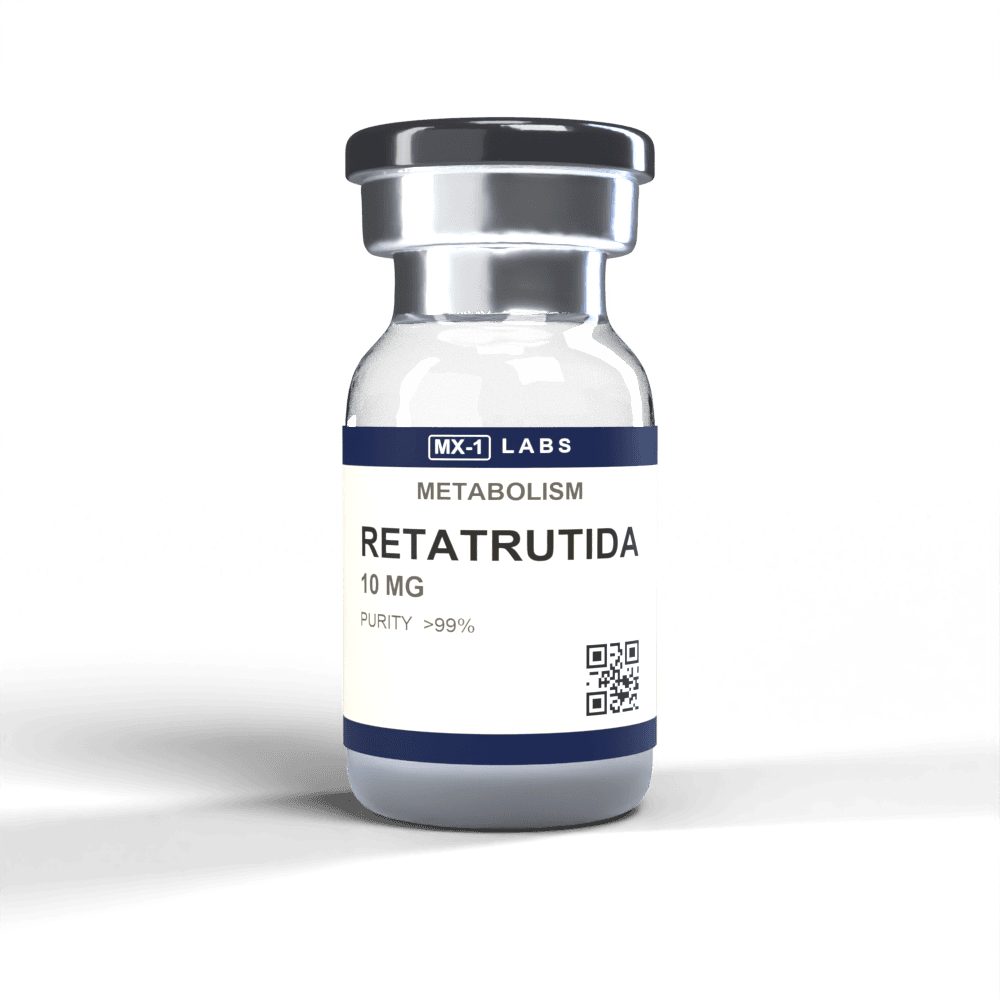
Retatrutide
Triple GIP/GLP-1/Glucagon agonist · Metabolism
4.5(6)FromMX$949.00
View product5 · 10 · 15 · 20 mg · For research
 Analyzed in the USAAvailable
Tirzepatide
Dual GIP/GLP-1 agonist · Metabolic
4.8(4)MX$1,399.00
View product10 mg · For research
 Analyzed in GermanyAvailable
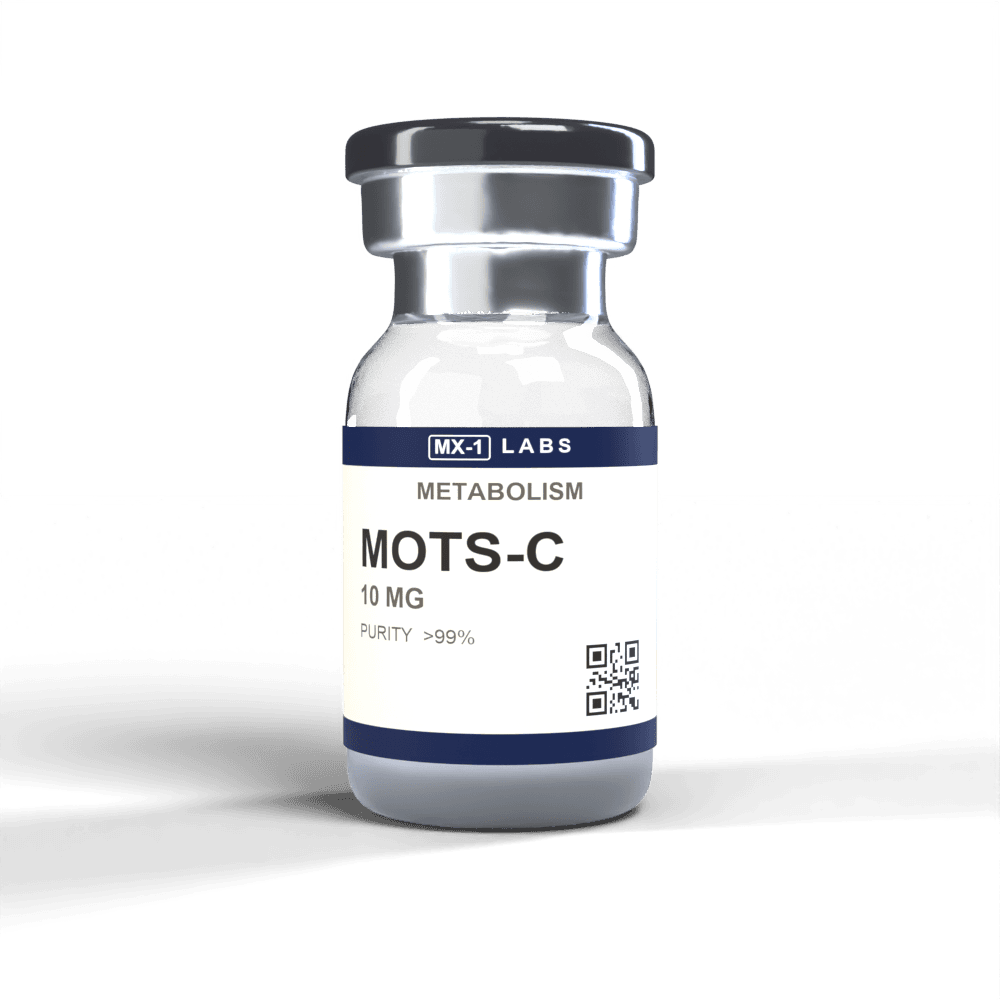
MOTS-c
Mitochondrial peptide · Cellular Energy
4.8(4)FromMX$720.00
View product5 · 10 mg · For research
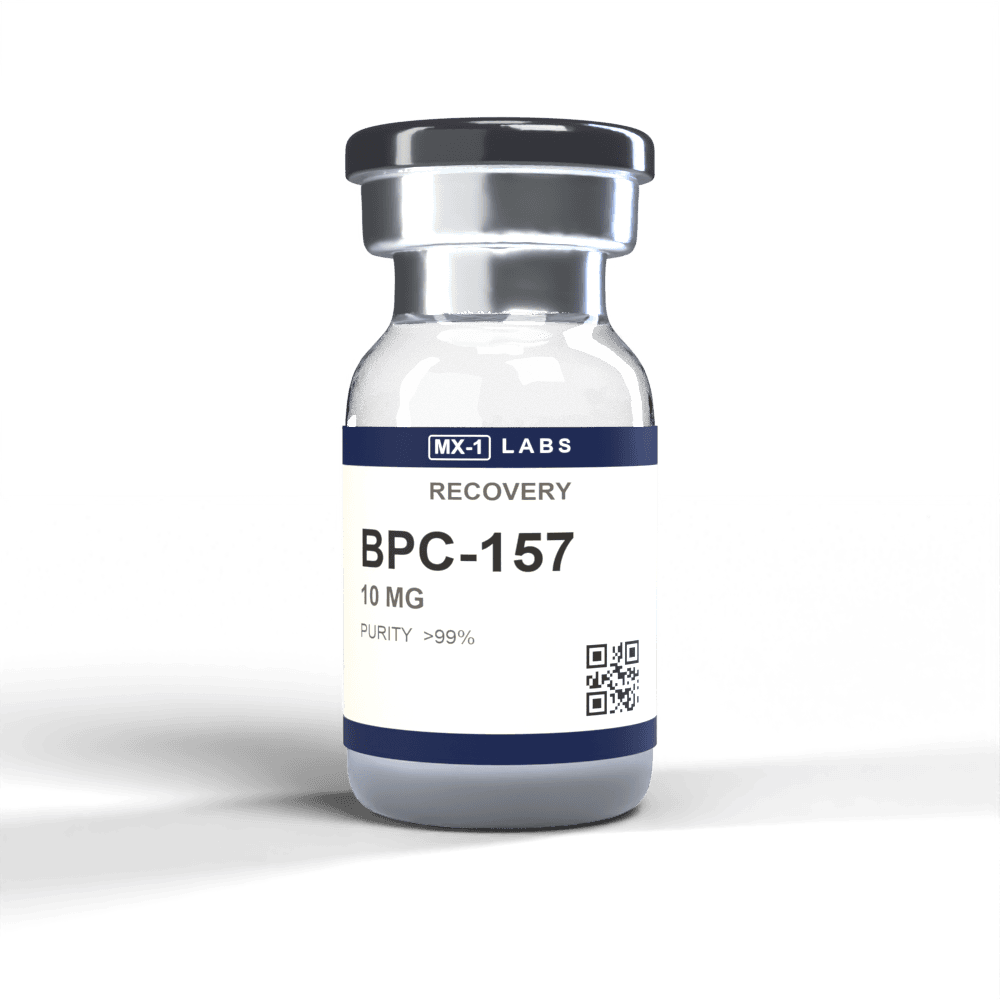 Analyzed in the USAAvailable
BPC-157
Pentadecapeptide · Regeneration
4.6(5)FromMX$673.00
View product5 · 10 mg · For research